
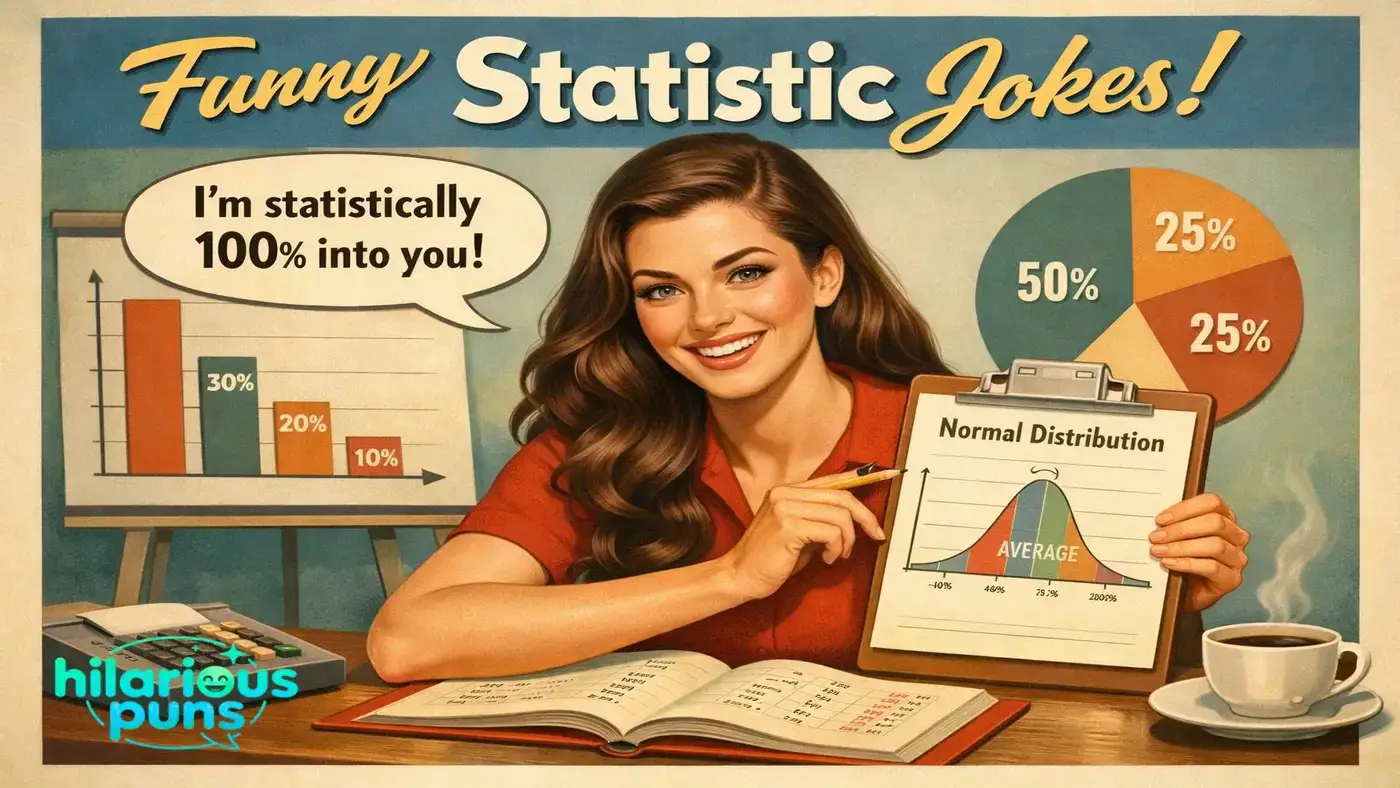
statistics jokes bring humor to numbers and data without losing the smarts. They turn dry math into clever, relatable laughs that feel fresh and genuine.
People love this humor because it connects to everyday struggles—cramming for exams, juggling spreadsheets, or decoding survey results. Stats suddenly don’t seem so intimidating.
Each joke here draws from real concepts in probability, averages, regression, and more. No tired clichés. Just sharp wit that clicks with anyone who’s dealt with data.
See also: 140 Funny Short Story Jokes for Instant Laughter
Hilarious Statistics Jokes & Puns That Beat The Odds
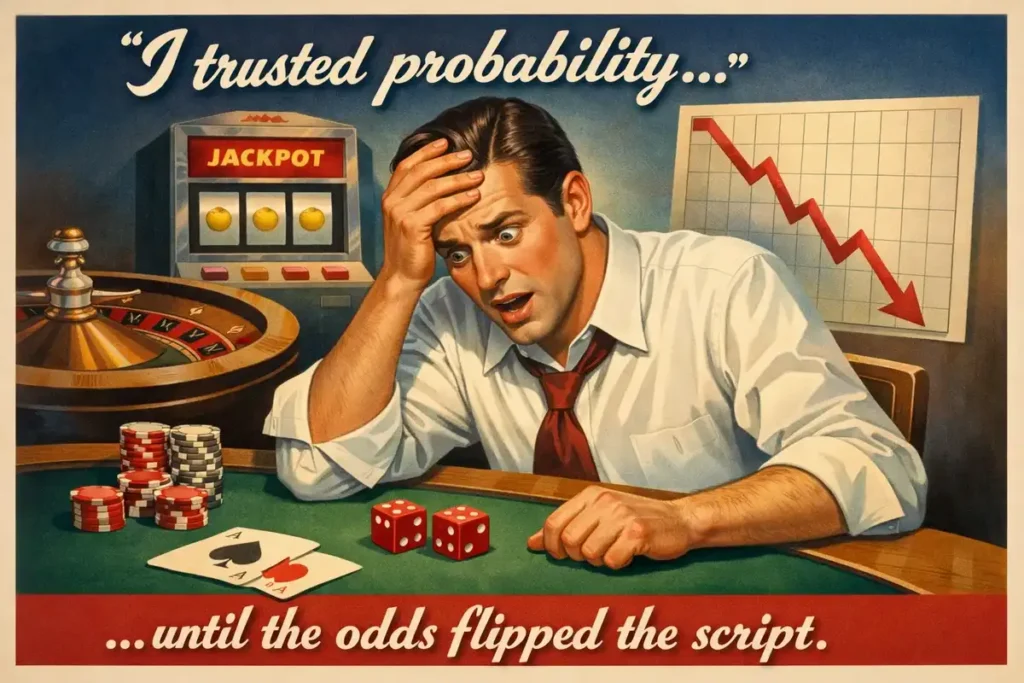
Probability jokes shine when the unexpected crashes the party. They capture the tension between hope and reality.
- I trusted probability until the odds flipped the script.
- My confidence soared but the chances sank.
- Everything looked fine until statistics spoke up.
- Hope felt real until the percentages sneezed.
- I felt lucky until the probability chart smirked.
- Friendly estimates fooled me more than once.
- Calm vanished when risk showed its face.
- Success was near until uncertainty crashed the scene.
- Logic worked well until outcomes rebelled.
- My plan leaned on likelihood and fell flat.
- I believed the math until expectations tanked.
- Confidence outpaced accurate forecasting.
- Balance held firm except for my luck.
- Optimism fizzled when data told the truth.
Quick Laugh Boost Tip
Use these during study sessions, exams, or tense discussions where a little humor breaks the stress.
Mean Median Mode Jokes Everyone Debates
The classic trio of averages never agrees—and their jokes reflect that drama.
- Mean always takes the blame.
- The median plays peacemaker in the middle.
- Mode loves to stand out by repeating.
- Averages hide the chaos quietly.
- The center tries to balance shifting data.
- Values argue louder than most people.
- The middle feels safe until it moves.
- Typical rarely means typical.
- The common confuses more than clarifies.
- Balance everyone hopes for rarely shows.
- The spread likes to stir the pot.
- Best range covers extremes without complaint.
- Peak thinks it’s the star.
- The outliers throw the wildest parties.
Quick Laugh Boost Tip
Perfect for classrooms or meetings where stats feel dry. These jokes lighten the mood fast.
Funny Statistics and Regression Jokes That Predict The Laughs
Regression jokes highlight surprising twists in relationships between variables.
- My confidence regressed when the data rebelled.
- The trend line promised hope but bent under reality.
- Variables tried connecting but missed the signs.
- Results deviated far from expectations.
- Regression wanted linear but got pure drama.
- Predictions failed but the humor stayed strong.
- Scatter plots look messy but tell stories.
- Correlation was weak but punchlines hit hard.
- Regression finds patterns in chaos.
- Data points ignored the script completely.
- Models lie quietly before the crash.
- The slope was steep but jokes were sharper.
- Residuals hide the real surprises.
- The best fit sometimes is just a good laugh.
Quick Laugh Boost Tip
Use these in meetings or presentations to ease tension and remind people stats can be fun.
Quick Dad Statistics Survey Jokes That Ask For Laughs
Survey jokes poke fun at quirky answers and data collection headaches.
- The survey asked for honesty and got tall stories.
- Respondents said yes but meant maybe not.
- Data collectors wished questions were simpler, not trickier.
- Answers surprised everyone except the analyst.
- Surveys gather lies wrapped in numbers.
- Questionnaires feel like interviews with a twist.
- Response rates fall faster than patience.
- Surveys promise clarity and deliver puzzles.
- Sample sizes make or break the story.
- Feedback feels honest until it’s anonymous.
- The last question always gets ignored.
- Surveys are data’s version of gossip.
- Answers skew left, right, and everywhere.
- Opinions swing wildly but numbers try to steady.
Quick Laugh Boost Tip
Great for market researchers or customer service teams. Share during meetings or casual talks.
Outlier Jokes That Stand Apart
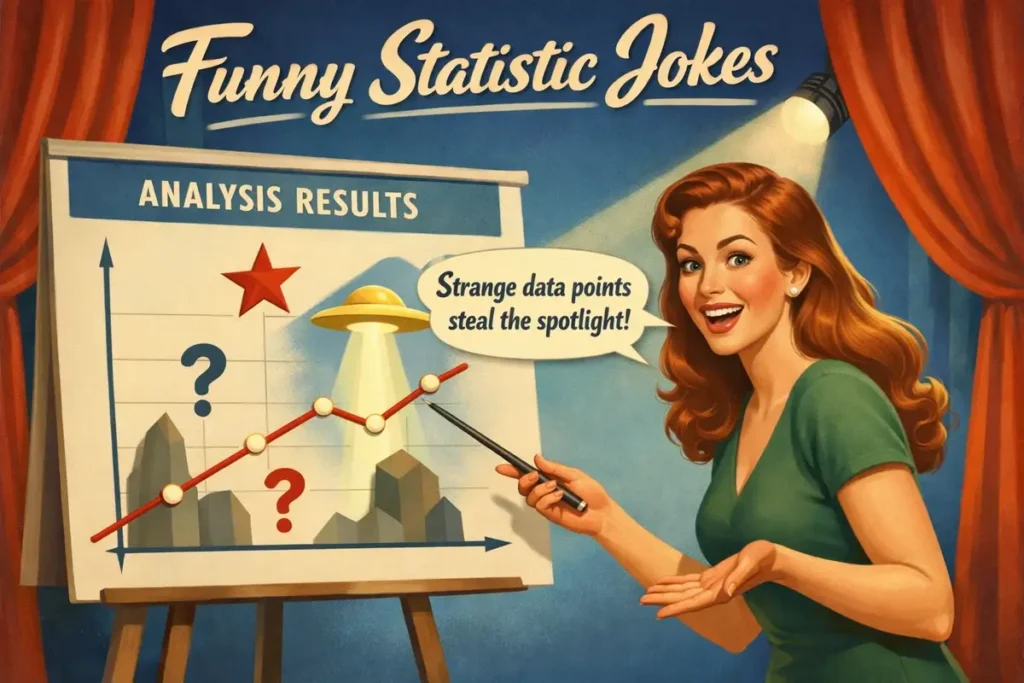
Outliers are the wildcards of data and humor.
- Outliers party when averages sleep.
- Strange data points steal the spotlight.
- One odd number ruins the whole story.
- Outliers refuse to follow the rules.
- Weird results spark the best debates.
- They’re the rebels of statistics.
- Outliers show up when least expected.
- They’re the punchlines nobody predicts.
- Some data points live louder than others.
- Outliers turn graphs into rollercoasters.
- Exceptions prove the rule and the joke.
- They’re surprise guests at every analysis.
- One outlier can ruin the mean’s day.
- Outliers remind stats need some personality.
Quick Laugh Boost Tip
Use these when odd results confuse the room or just to lighten serious presentations.
Best Statistics Sample Size Jokes That Measure Up
Sample size jokes highlight how small numbers can cause big headaches in data.
- Small samples cause big mistakes.
- Sample sizes sometimes feel like guesses.
- Less data means more drama.
- Tiny samples make huge waves.
- Small groups think they represent all.
- Sample size jokes never get old because they’re always too small.
- Samples that size cause massive surprises.
- The smaller the sample, the louder the debate.
- Big conclusions from tiny samples? Watch out.
- Samples try hard but often fail.
- Sampling errors happen when you rush.
- Tiny samples love to exaggerate.
- Samples prove nothing but raise questions.
- Sample size matters more than you think.
Quick Laugh Boost Tip
Great for classrooms, data teams, or anyone tired of hearing “But the sample was small.”
Data Visualization Jokes That Draw Smiles
Charts and graphs get their own set of laughs here.
- Pie charts are great unless you hate pie.
- Bar graphs love to show off.
- Scatter plots look messy but tell good stories.
- Line charts remind us that life isn’t straight.
- Graphs distort truth creatively.
- Visualization makes data look friendlier.
- Charts try hard to be clear but get complicated.
- Visuals help when numbers fail.
- Histograms sound fancy but just look weird.
- Infographics tell tales better than words.
- Colors lie but people love them.
- Graphs are data’s personality.
- Sometimes charts say more than numbers.
- Good visuals turn boring data into art.
Quick Laugh Boost Tip
Use these when designing presentations or teaching data skills. They keep things lively.
Fresh Statistics & Correlation Jokes That Link The Fun
Correlation jokes tease the mix-up between cause and effect.
- Correlation doesn’t mean causation but it sounds convincing.
- Two things happen together but don’t ask why.
- Correlations make bad excuses for bad results.
- The link looks strong but reality is weaker.
- Correlations fool us daily.
- Data loves to play matchmaker.
- Coincidences dress up as correlations.
- Correlation parties invite causation but it rarely shows.
- Relationships in data are complicated.
- Just because it’s linked doesn’t mean it matters.
- Correlations survive on coincidence.
- Data loves an attractive pairing.
- Correlations explain nothing but confuse plenty.
- The strongest correlation is usually just a coincidence.
Quick Laugh Boost Tip
Perfect for discussions about data mistakes or teaching critical thinking. These jokes remind us not to jump to conclusions.
Hypothesis Testing Jokes That Prove The Point
Hypothesis jokes make fun of trying to prove or disprove ideas with data.
- Hypotheses get tested more than people do.
- I set a null hypothesis and it rejected me.
- Testing ideas is like chasing a moving target.
- Sometimes you fail to reject the null and feel null inside.
- P-values are like mood swings in numbers.
- Statistics loves to play judge and jury.
- Testing theories means expecting surprises.
- The hypothesis hoped for truth but got chaos.
- Data never behaves as the hypothesis wishes.
- Null hypothesis is the party pooper of statistics.
- Tests prove some things and confuse others.
- Hypothesis testing is hope with a rulebook.
- Sometimes results don’t match the prediction.
- Testing shows us where logic takes a vacation.
Quick Laugh Boost Tip
Great for classrooms or research labs to lighten serious testing sessions.
Standard Deviation Jokes That Go Off The Chart
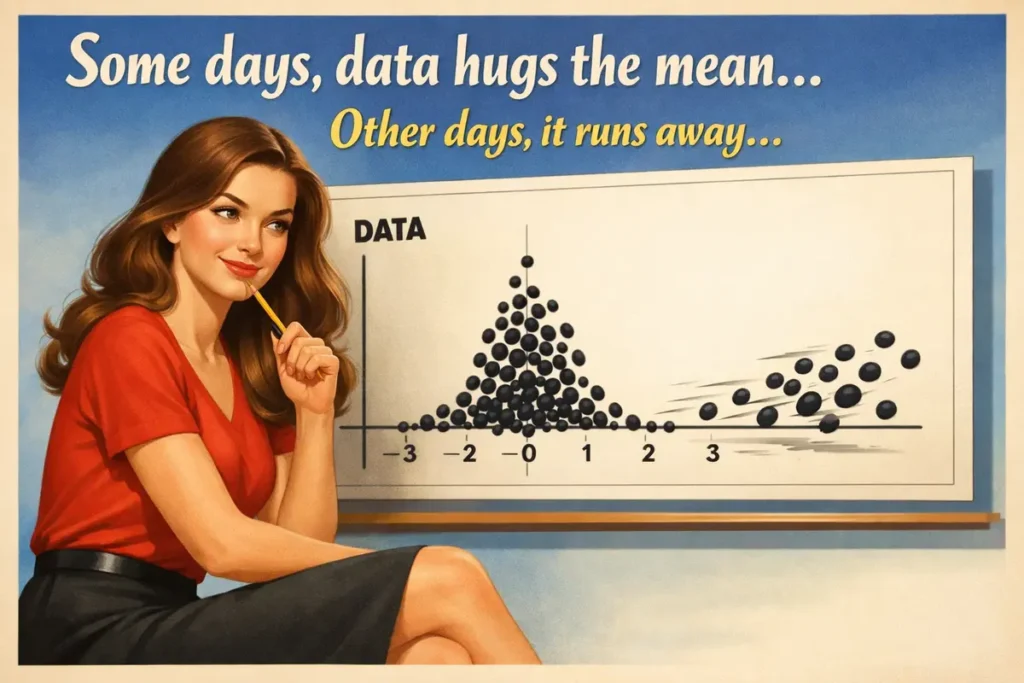
Standard deviation jokes focus on spread, variation, and how data strays from the norm.
- Standard deviation loves to shake things up.
- Variation keeps life interesting but stresses statisticians.
- Data points stray far and wide like wild horses.
- The average fears standard deviation’s wild side.
- Spread is bigger than the story wants you to think.
- Standard deviation tells us when data goes rogue.
- Some days data hugs the mean, other days it runs away.
- Variation makes graphs look like mountains and valleys.
- Without deviation, stats would be boring copies.
- The further from the mean, the louder the story.
- Standard deviation breaks all the neat rules.
- Variation keeps statisticians humble and confused.
- Spread shows the true face behind averages.
- Standard deviation is chaos wrapped in math.
Quick Laugh Boost Tip
Use these in lessons or meetings when explaining variation. They make abstract concepts feel real.
You might like: 140 Flirty Dad Jokes That Win Hearts and Spark Smiles
Conclusion
Statistics jokes bring life and laughter to what can feel like dry, complex data. They connect math to real experience, making probability, averages, and variation relatable and fun. These jokes work because they come from everyday moments and clever insights, not textbook jargon. Share them in classrooms, offices, or casual chats to break the ice and make numbers easier to digest. Embracing statistics puns helps everyone see data not just as numbers but as stories worth smiling about.
FAQs
What is statistics used for in everyday life?
Statistics helps us understand data from surveys, polls, and experiments. It guides decisions in business, healthcare, sports, and more by showing patterns and trends.
How do mean median and mode differ?
The mean is the average of all numbers. The median is the middle value when numbers are ordered. The mode is the most frequent number in a set.
Why is sample size important in statistics?
Sample size affects how reliable results are. Too small a sample may give misleading answers, while a larger sample better represents the whole group.
What does correlation mean in statistics?
Correlation measures how two variables move together. A strong correlation shows they change in sync, but it doesn’t prove one causes the other.
What is standard deviation and why does it matter?
Standard deviation shows how spread out data points are from the average. It tells us if data is consistent or varies widely, helping us understand reliability.

Lead Joke Curator
Curating the funniest, quirkiest, and most shareable jokes online. Making sure every visit brings a smile.